



| TOPIC: Newbie Basing Questions |
 Standard User Posts: 208  Newbie Basing Questions Newbie Basing QuestionsNick the Lemming 30th Nov 2018 09:03:16 If you're basing for altar of freedom and age of Hannibal, I'd recommend either 30mm or 40mm square bases, so that you could put two of the former together if you were to want to play a polemos-related game. The latter size is the one used by littlewarstv for their AoH games and does look good. I'd suggest 30mm for ACW in case you wanted to try longstreet too since they'd work great for that game too, and for bloody big battles. For Napoleonic, my 6mm stuff is all based for Bluecher, with loads of figures on 80mm by 60mm bases. For small scale figures, the price is an excellent reason to go for spectacular scenic basing rather than just depicting a unit with 3 blokes taking a flag for a walk, unlike larger scales. |
 Standard User Posts: 1244 Newbie Basing Questionsdourpuritan 1st Dec 2018 08:31:16 Good point Nick. I have started to make some 30x30 ACW bases so that I can use my figures for BBB as well as AoF. Already working on 40x40 Hannibal bases. TWTV also recommend Days of Knights 2 for later Medieval/Italian Wars games on 40x40 bases which would look spectacular in 6mm (although my own medievals are 10mm). A little goes a long way |
Standard User Posts: 100 Newbie Basing Questionsbushs 1st Dec 2018 02:49:23 Hi Glenn, I'm interested in your discussion regarding basing artillery as I've spent a fair amount of my own time trying to work out the best compromise and way (uncomplicated) for simulating artillery in my personal rules. How do you mean little tanks? Isn't the footprint of the limber miniature disproportionate to the footprint of the infantry bases? As in way too big. Probably more my opinion now, but factoring artillery into brigade bases for brigade based games seems to be more logical than putting a single battery on a unrealistically huge footprint. What would be the alternatives for simulating batteries deployed as half batteries and sections? Just thinking about it some more, from memory a lot of the descriptions of actions in the G.Nafziger books regarding the Napoleonic period that I've read describe artillery deployed in sections and half batteries rather than in complete batteries. ..pretty much anytime I read a set of rules and they put a whole battery on a single base I'm thinking, this just isn't correct, this isn't how it worked in practice... Best regards, Steve |
Standard User Posts: 13 Newbie Basing Questionszeitsev 1st Dec 2018 03:47:49 Its really gratifying to receive the advice you've all offered. It's clear there are a lot of thoughts about what works best in a game. So I'll elaborate a little bit on what I want to help guide your rules recommendations. 1) Grand tactical to operational scale - My inner meglomaniac says moving companies around is not fun. Plus, IMO, tactical level games amplify unreality. Suddeness, surprise, and confusion were/are the hallmarks of many tactical actions. As a thousand foot tall general with near perfect situational awareness, sans an umpire, it rings false. 2) Little fiddliness or excessive detail - This is obviously in the eye of the beholder and depends on the game scale. For example, let's take unit facing. Some would insist this is a must. Others would argue that a local commander would react to a potential flanking movment using the benefit of interior lines, and that a higher level commander wouldn't concern himself with that level of detail. I fall in the latter camp. Things that I think are important to address are unit strength and weapon effectiveness; morale/fatigue; the differences between fire and shock combat; command and control limitations; terrain impacts; the need for reserves; and higher level (div/corps/army level) morale. 3) Quick Play & Drama - The game should move quickly for all players, with a minimum of down time for the other guy. It should have sweeping unit movements across the game board. Combat should have the minimum number of factors to calculate commensurate with getting realistic results; and have unit losses, advances and retreats. I hate counting factors and determining odds; like throwing buckets of dice; hate having huge number of saving throws which then undo my lucky rolls; and like having some small degree of interaction /decision-making into a combat. On this last point, Im being slightly hypocritical. Yes, a higher level commander wouldnt typically dictate a brigade's decision to hold or withdraw. But Im a player too and I'd like some input into the outcome of combats, even if it is a bit unrealistic. If this is achieved by using a matrix, then it can't just be a pick/comparison of random postures.(Attack Right vs Defend Left); each posture should have its own strength and weakness (ie "I selected Withdraw. to end the combat" "Too bad, for you because I picked Frontal Assault. That's a +2 to all my rolls this round") . 4) A Campaign setting - Not critical but nice to have. Fighting battles in isolation is fine, but I like to carry over some unit losses etc between battles and have some greater context and purpose. That's it for now. There may be game elements I've failed to list, but I think you now have a sense of what I'm looking for. Appreciate your recommendations!
|
Standard User Posts: 208 Newbie Basing QuestionsNick the Lemming 1st Dec 2018 04:57:42 For Bluecher, I use both approaches for artillery, some bases are purely divisional artillery batteries, larger guns with climbers to the rear, while I also have some infantry bases with attached smaller guns, like this base (taken when in progress):
|
| Standard User Posts: 1244 Newbie Basing Questionsdourpuritan 1st Dec 2018 05:09:47 I am very much in agreement with what you want from a game. TBH the ONLY rules for ACW that I have come across which address all of the above points are Altar of Freedom and Bloody Big Battles. Everything else I have tried has too much hang over from 70s/80s rules demanding small scale tactical manoeuvering in a large scale battle. One set that really disappointed me was Fire&Fury as it could not get past lots of small bases in a unit (sometimes up to 14) with single line, double line, column etc. Far too much faff. Finally gave up on them when we fought part of Gettysburg at the club. After four 3 hour sessions, and without a conclusion, we packed it in. Playing at C-in-C, but also having to make the same decisions as a captain, is a recipe for glacial games. A little goes a long way |
Standard User Posts: 13 Newbie Basing Questionszeitsev 1st Dec 2018 07:14:37 Glenn took the time to write a thoughtful post which raised some interesting questions. So, here are my responses. Measuring tapes, base widths, hexes and such: Perhaps the mini culture traditionally uses rulers, but that doesnt especially concern me. HG Wells wore a tie and stiff collared shirt, but who does that now? Call me an iconclast, but to me, 'the games the thing'. Yes, tapes/rules/sticks may be simple to use - in theory. But Ive encountered players at conventions who have engaged in some wildly tortuous manueverings. Units unrealistically go serpentine to avoid obstacles or attempt to ascend a slope only to physically fall backward (or somehow magically get to the top). And no doubt you've encountered the twin headaches of Range and its fierce handmaiden, Line of Sight. (Do we measure from front of unit or center of unit or front center of the unit? LOS clips a terrain feature, where half the unit can see, the other cant. What do we do? Is that target in the front 45 degree arc or to its flank? Half the target unit is in short range and the other is at mid range, etc etc). All this happens frequently enough that it gets in the way of an enjoyable game. Agree that hexes dont look especially good and do induce distortions, particularly when dealing with the staggered grid side where every other unit is advanced. It doesnt look straight or real. But at the grand tactical level, where range scale is is aggregated up to 300 yds or thereabouts, it is largely irrelevant. There's mostly one range for infantry fire: one hex. You also said that positioning and flanks were critical in the H&M era, which may be true at the tactical/regimental level. But I can also provide examples where it wasnt, like with the 20th Maine at Little Round Top. At the brigade level though I think facing is not critical. Brigade commanders typically kept a regiment or two in reserve to respond to flank attempts, and were generally able to respond to outflanking. When a brigade did retreat, it may have been because a regiment in it was indeed outflanked. But that could also happen in a frontal battle simply due to battle confusion and uncoordinated regimentaladvances. If you have in mind specific examples where whole brigades flanking, that'd be helpful to hear. Bottom line for me: With a grid, things are more cut and dried, with quicker play because there are fewer issues/questions. So on balance, I'm willing to accept the trade off. And needing facing at the brigade level? The jury is still out. One last good thing about hexes: when the game is over, I feel better about my fellow man. Glenn wrote "Artillery will give you more problems as a single gun and crew are normally put on a 30x30 base. A limber pretty much fills a 60x30 base. Some players don't use limbers and create little mobile tanks that bob and weave all over the table since they are free of the actual encumbrance of limbers. Creates a very silly game, but lots of players do it. Regardless of limbers or not you could fix one crew member with the gun and have the other 3 removable"....Okay so the above might work but now you have a scale imbalance along with a distribution problem. The artillery base takes up half the frontage of a brigade. That's probably too wide for the ACW or represents too many guns. Some brigade based games overcome this problem by not having separate artillery bases, they simply factor their presence into the value of the infantry or cavalry brigades. Which is okay but it's a big compromise and starts to erode the feeling of a miniatures game and give it the feeling of a board game. This you might like but some miniature players don't and it's one of the turn off factors to brigade games for them. First, Im confused about the need for a limber. Im on a budget, and would prefer to invest in buying figures and guns. The rules I'm familiar with say has been if a battery moves in a turn, it can't fire (except maybe horse artillery) so that solves the "little tank" issue you raised. if you could elaborate on why a limber is needed at the brigade level with say 30 minute turns, that'd be helpful. Agree that limbers do look cool, but Id prefer to buy artillery pieces instead, ideally with 1 gun = 1 battery. For simplicity, I plan to only gets artillery pieces for the batteries deployed at the battalion level. In the ACW, it was largely only those batteries which were deployed in battalions that had a distinct/unique role, namely sustained bombardment at long range with round shot. Batteries which were attached to infantry brigades will be accounted for with some other method. From what I've read, their chief effect was to deliver canister fire in support of defending infantry, and the effects of canister aren't terribly different from effective infantry fire. Lastly, there's a terrific little booklet called Battle in the Civil War by the late Paddy Griffith. Its very simple, but full of interesting data and drawings. Griffith's Battle Tactics of the American Civil War is also great. Both are highly recommended. I have a sample page jpg which addresses some specifics on frontages of artillery batteries. Alas, Im not setting up a blog or enrolling in a website simply to be able to post it here. If someone would be kind enough to put it up here, I'll be happy to e-mail. From what I read of your comments Glenn, would it be safe to assume that you prefer games at the tactical (regimental and below) level? |
Standard User Posts: 406 Newbie Basing QuestionsGlenn Pearce 3rd Dec 2018 06:09:11 Hello Steve! Great questions, thanks for asking. I also am a fan of uncomplicated and best compromise. So we are of like mind. "How do you mean little tanks?" Lets say your infantry and cavalry are on 60x30 bases, often in brigades, which makes them cumbersome to move. Your artillery are on 30x30 bases and often alone (its a battery). Gamers without limbers simply move the little artillery pieces pretty much anyway they want to. They move around the game table more like football players which does not resemble the historical movement of a battery in any way shape or form. Historical batteries rarely moved once they were unlimbered. Gamers without limbers always move their guns around at the first opportunity and because the game piece is so small and on its own it simply zips around from one spot to another with very little difficulty. Not to mention your ability to squeeze them into very small and tight spaces. Without limbers the movement of these single pieces is about as far away from historical as you can get. "Isn't the footprint of the limber miniature disproportionate to the footprint of the infantry bases? As in way too big." If you include the caissons and other support wagons the model is probably too small. All these limbers/caissons/wagons take up a lot of space in the rear and are sometimes back a fair distance which greatly complicates their ability to move anywhere. So their collective footprint is sizeable. Without representing them you also greatly distort the battlefield by allowing other units to occupy their empty space. "Probably more my opinion now, but factoring artillery into brigade bases for brigade based games seems to be more logical than putting a single battery on a unreasonable huge footprint. " The basic problem is in most cases the brigade base is greatly distorted. So if your going down that road why not distort the battery base as well? If you want simplicity factor it in as most brigade games do. If you want to retain any type of tactical flexibilty than your generally faced wiith using another unrealistic base size for your artillery. Batteries were deployed as one unit or as half batteries or in sections. I think it all depended on a number of factors including original disposition and the task at hand. That means that pretty much anything goes and every situation could be different especially depending on the army and period. It can be very complicated at certain times and others just a simple deployment of a single battery. Most rule writers seem to have chosen to make it as simple as possible by only dealing with batteries. In RdG I used a sliding scale so you can call a model whatever you want depending on the level you are playing at. When I first started miniature gaming (over 40 years ago) in 25mm our standard artillery battery was composed of 3 model guns (3 sections) and 3 limbers. One member also included 3 cassions. Our battalions and cavalry regiments were mainly 36 figures. In our quest to fight bigger battles we reduced it to 12 figures and 1 gun and limber for a battery. It seems that over time almost all rules went to 1 gun for a battery and almost all gamers don't use limbers to save on cost. Hope this helps you out and if you have any other thoughts or questions, just fire away. Best regards, Glenn |
Standard User Posts: 406 Newbie Basing QuestionsGlenn Pearce 3rd Dec 2018 07:28:23 Hello Zeitsev! "wildly tortuous manoeuvrings", "line of sight", arc of fire, poorly defined flanks, etc., are the offsprings of poorly designed rules and overzealous players. Obtain a good set of rules (extremely rare) that has solved all of these problems and others and they fade away. The overzealous players are then sometimes toned down and even fade away as well. With the exception of the odd overzealous player we haven't had any of these problems for years. I tried very hard to address all of these problems when I wrote RdG. In gaming terms it doesn't really matter what the token/base represents, battalion/regiment/brigade. If it can't fire on or attack a flank or rear it loses its historical advantages. The most basic way historically to successfully attack an enemy was to assault their flank or rear. Often this was not possible and the enemy had to be dealt with head on. Frontal attacks could very easily go wrong and end up in disaster. Little Round Top was the anchor for the left flank of the Union army. It was a naturally strong position, on a slight elevation protected by rocks, trees, bushes with a small open area on top. To hold the position they formed in a sort of semi-circle, which also protected their flank and rear to some extent. There is nothing wrong with gaming at a level where you ignore or simply factor in all of these problems. The players just lose their ability to be able to evaluate all of these problems on their own. Most miniature gamers want to be able to master these problems on their own. Sanitizing it down to one simple brigade number just dosen't cut it for most of them. It reduces the game to simply who rolls better or who has more dice. Not very challenging and certainly makes a very mundane game for me. Hopefully my comments to Steve explain the tank/limber issuse. If not just ask for more and I'll elaborate. I realize that your also on a budget, most wargamers are and their also generally tight with a buck. So if that forces you into more compromises then so be it. I've been working on my collection for over 40 years and I'm still not finished. My yearly budget has rarely been big. Yes, some rule designers treat canister from a battery as a similar effect to infantry firing. Artillery could be deployed at any level and could be different under different circumstances. The simple idea of being offensive or defensive can have a major impact on when, where, how and at what level to deploy your artillery. The best use of artillery is not an easy thing to master. A lot of players never get it. So again if your happy with just attaching a value to a brigade base then go for it. Just keep in mind that your making an important assist in gaming a no brainer. Patty Griffiths work within the hobby is known by experienced gamers (he was one himself). I like his books and he certainly enlightened me on some issues. So there is no real need to post any of his work unless you want to discuss some bits in detail. I enjoy and will play games at any level as long as the rules are well done. Historically, the "well done" part has been extremely hard to find for me. The compromises made by most rule writers I generally find were poor choices. So I pretty much only play RdG, which can be played at any level/scale for most of the Horse & Musket era. Just as a point of interest in developing RdG we tested it against a very popular ACW rule set and the play testers all agreed that RdG was faster, easier to follow, made more sense and actually gave them a better feeling of playing a ACW battle. Best regards, Glenn |
Standard User Posts: 13 Newbie Basing Questionszeitsev 4th Dec 2018 02:48:54 Glenn. I ordered BBB and after reading some capsule reviews of RdG will be also ordering it also. RdG's 'tempo points' idea sounds similar to CAP points in some boardgames. Anything which helps limit what a player can do in a turn is a good thing. Plus, I like that you tackled FIW and AWI scenarios. Looking forward to reading your rules. Regards, - Doug |
Notice: Due to recent changes to EU legislation sales to these countries is currently unavailable. Please accept our apologies.
> Forums > Painting and Modelling > Modelling and Conversions > Newbie Basing Questions
Reply

12
NEWS
JOS26 - Gone, but not forgotten...11th Jul 2026
It's That Most Wonderful Time of the Year!
26th Jun 2026
Coming to Joy of Six 2026...
20th Jun 2026
New for JOS26
12th Jun 2026
Joy of Six 2026 Floorplan
6th Jun 2026
LATEST FORUM POSTS
1st Anglo-Afghan War by NICK8th Sep 2026
1st Anglo-Afghan War by ChrisBBB
8th Sep 2026
1st Anglo-Afghan War by Whirlwind
6th Sep 2026
1st Anglo-Afghan War by GrantWorley
5th Sep 2026
Joy of Six Book delay... by ironass
30th Aug 2026
UPCOMING SHOWS
LATEST RELEASES
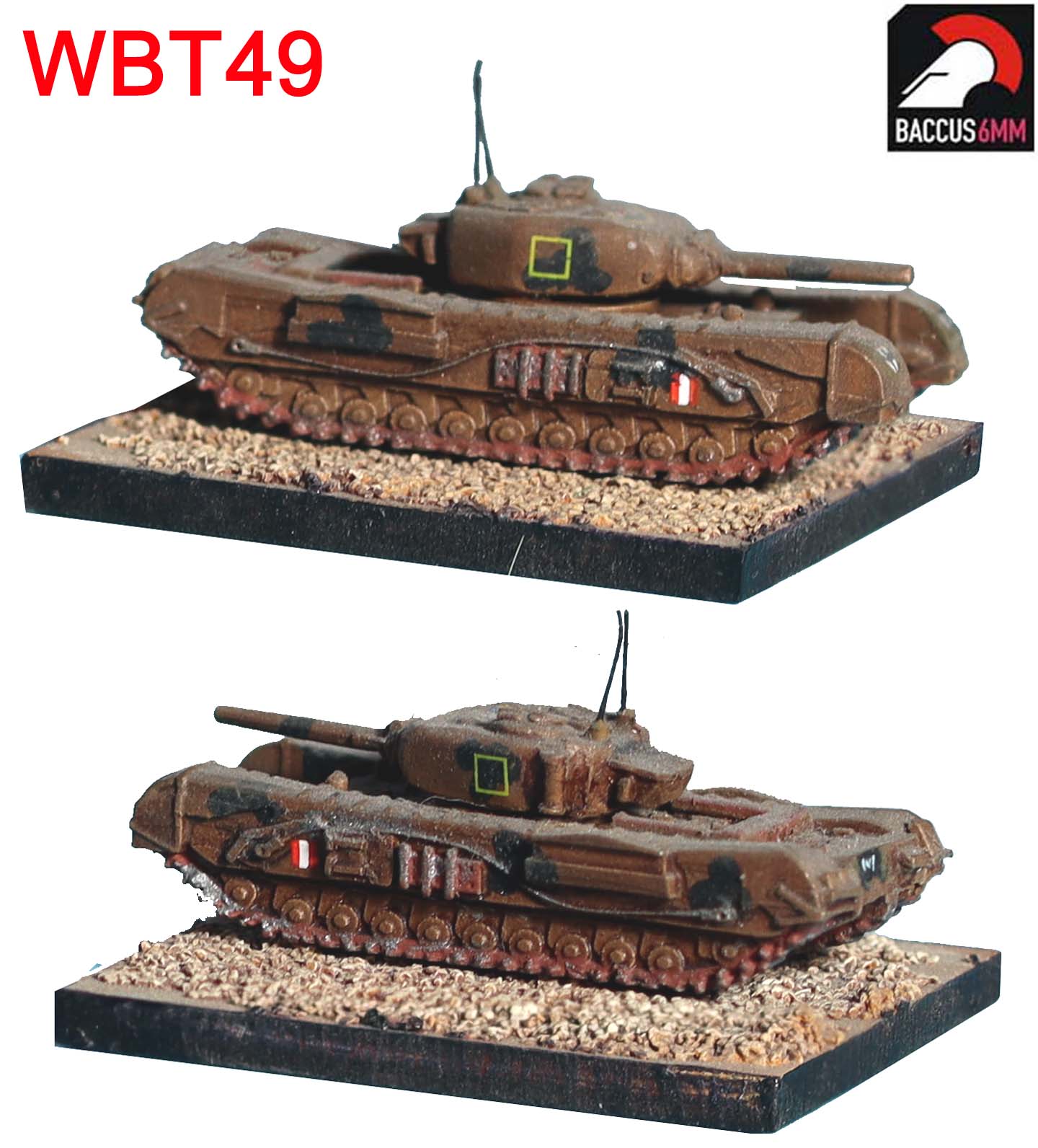 WBT49
WBT49Churchill NA75
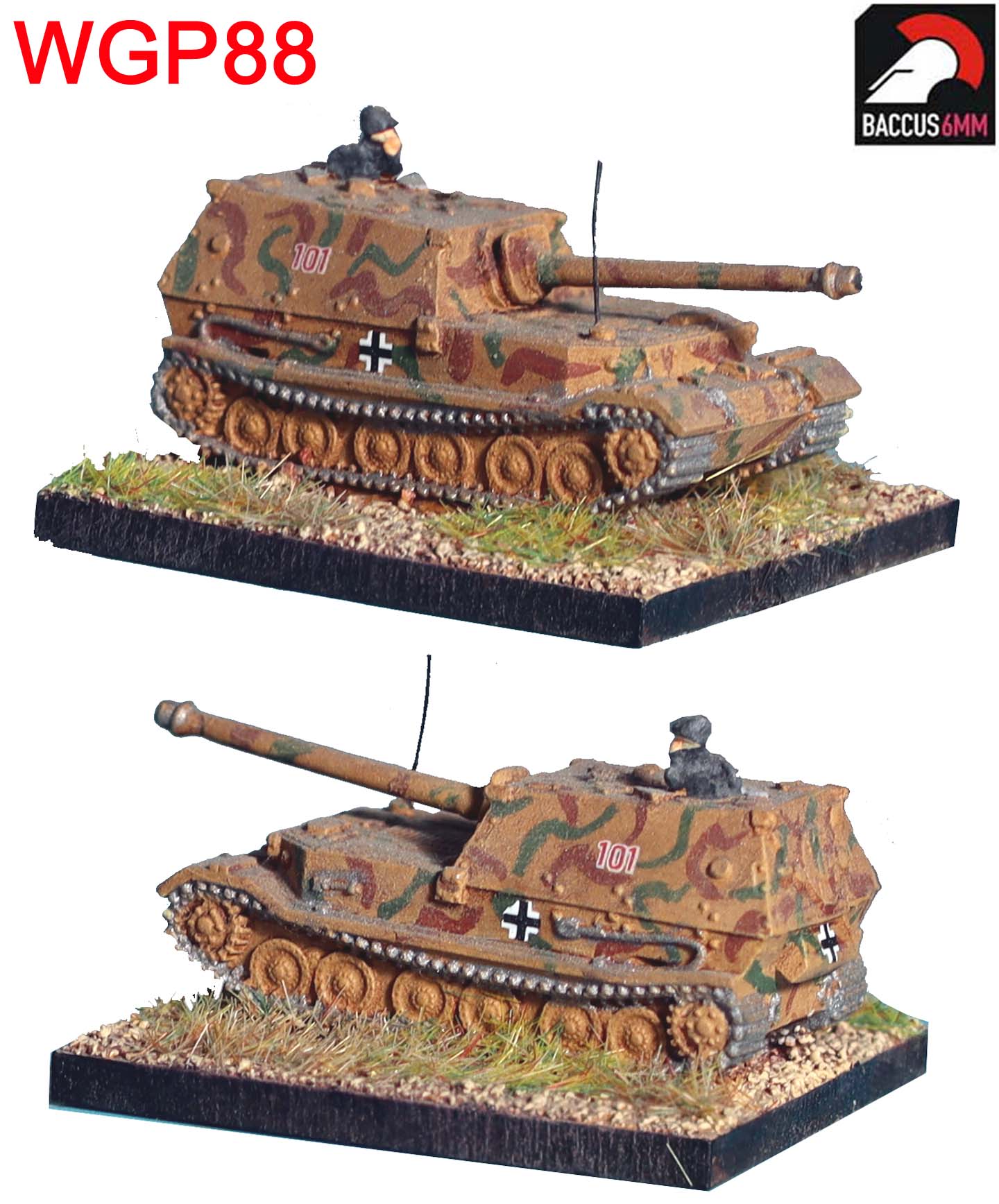 WGP88
WGP88JgPzVI Ferdinand
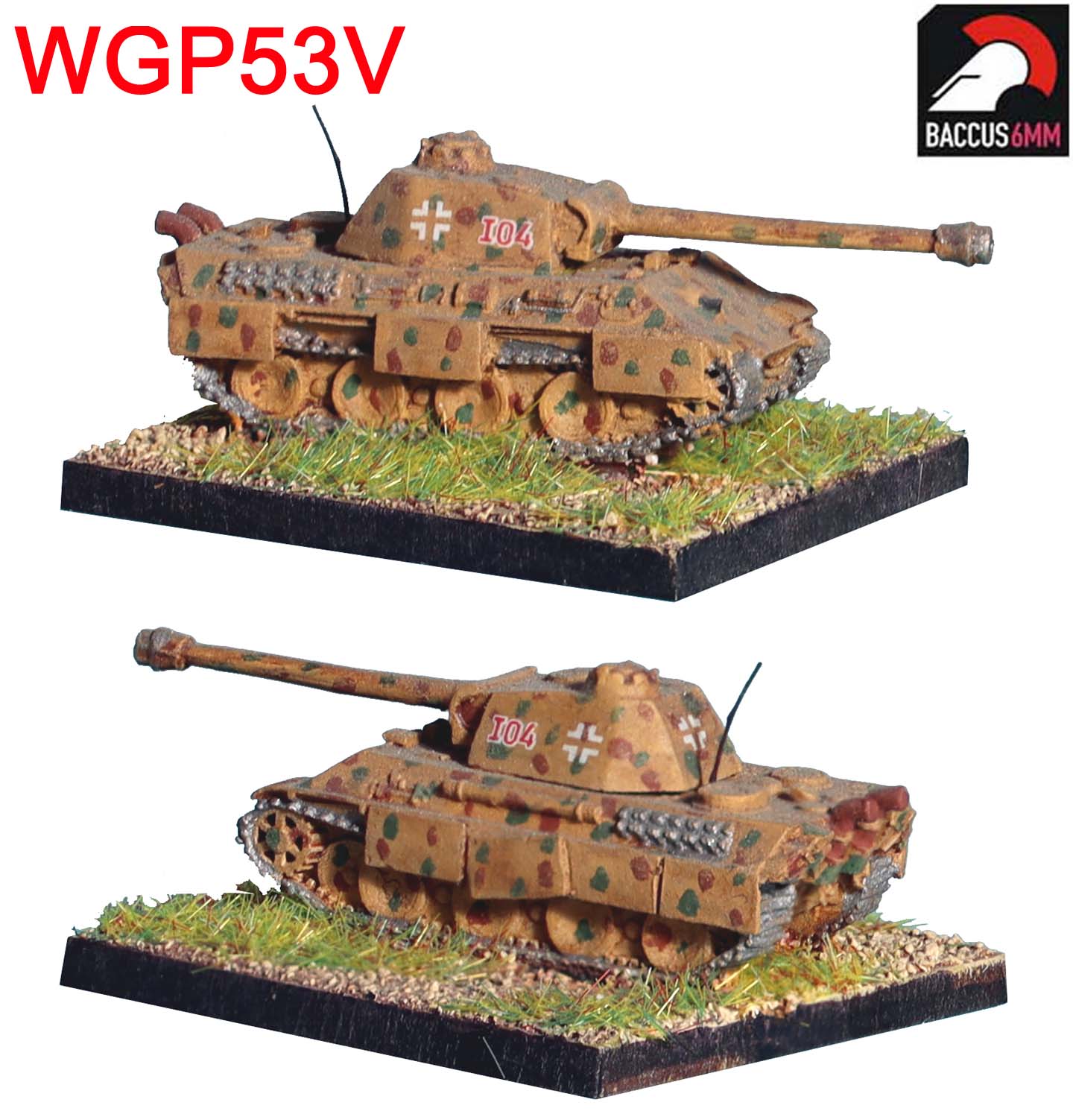 WGP53V
PzVG Panther veterans
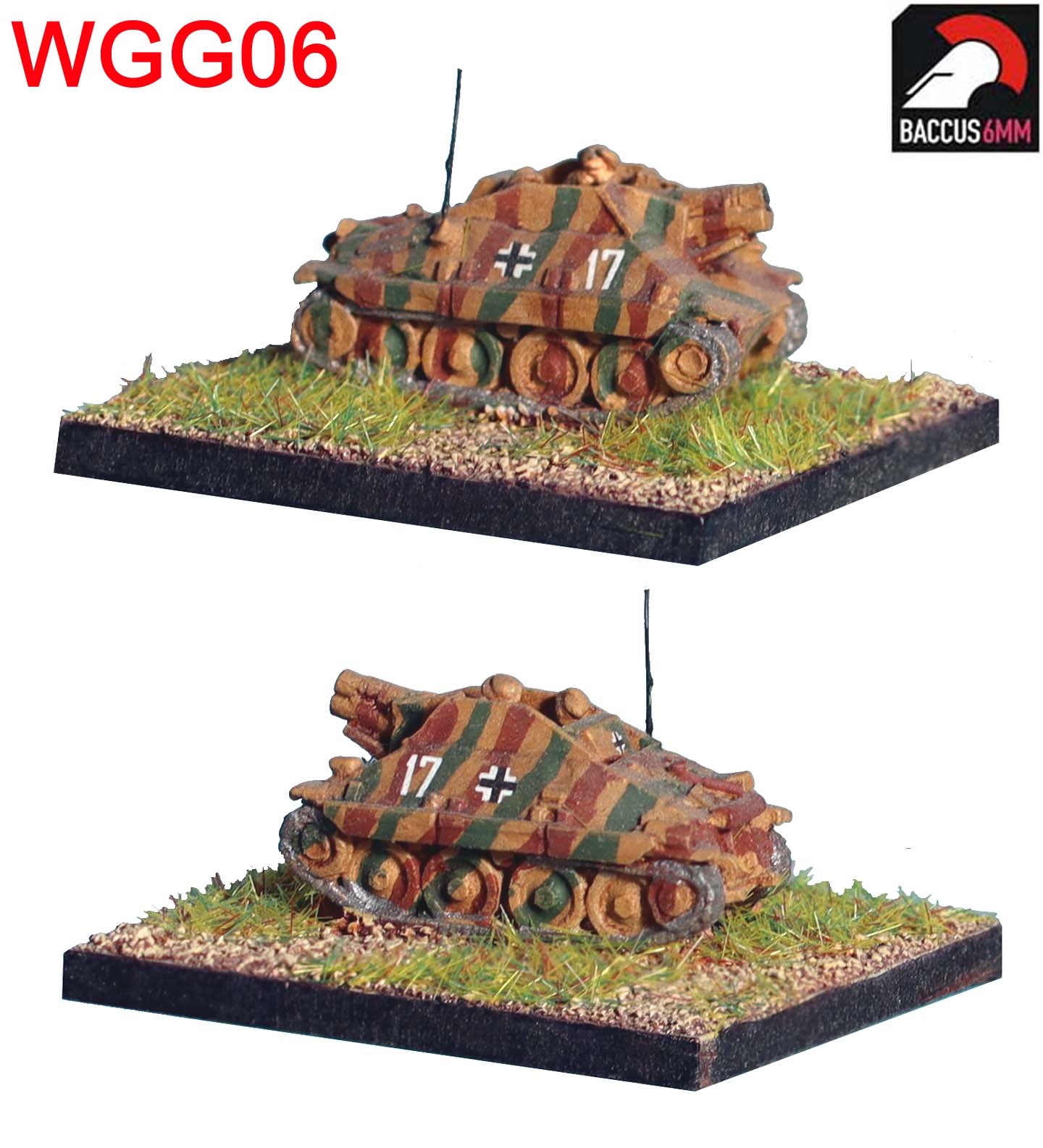 WGG06
WGG06sIG33 auf berge Hetzer
 WGG03
WGG03StuIG33 auf PzIII